Four Paces Apart
I didn't realize how often I wait for strangers to line up in groups of three or four until I started putting my old folders side by side.
I was going through some older folders on my drive last week when I noticed a habit I never planned on purpose. A lot of my favorite street photos have three, four, or five people spaced out across the frame like steps on a ruler. I don't walk around counting heads or measuring the sidewalk with my eyes. Most of the time I just raise the camera when a scene feels balanced to me. It only became obvious that I wait for that kind of spacing when I put photos from different trips next to each other.
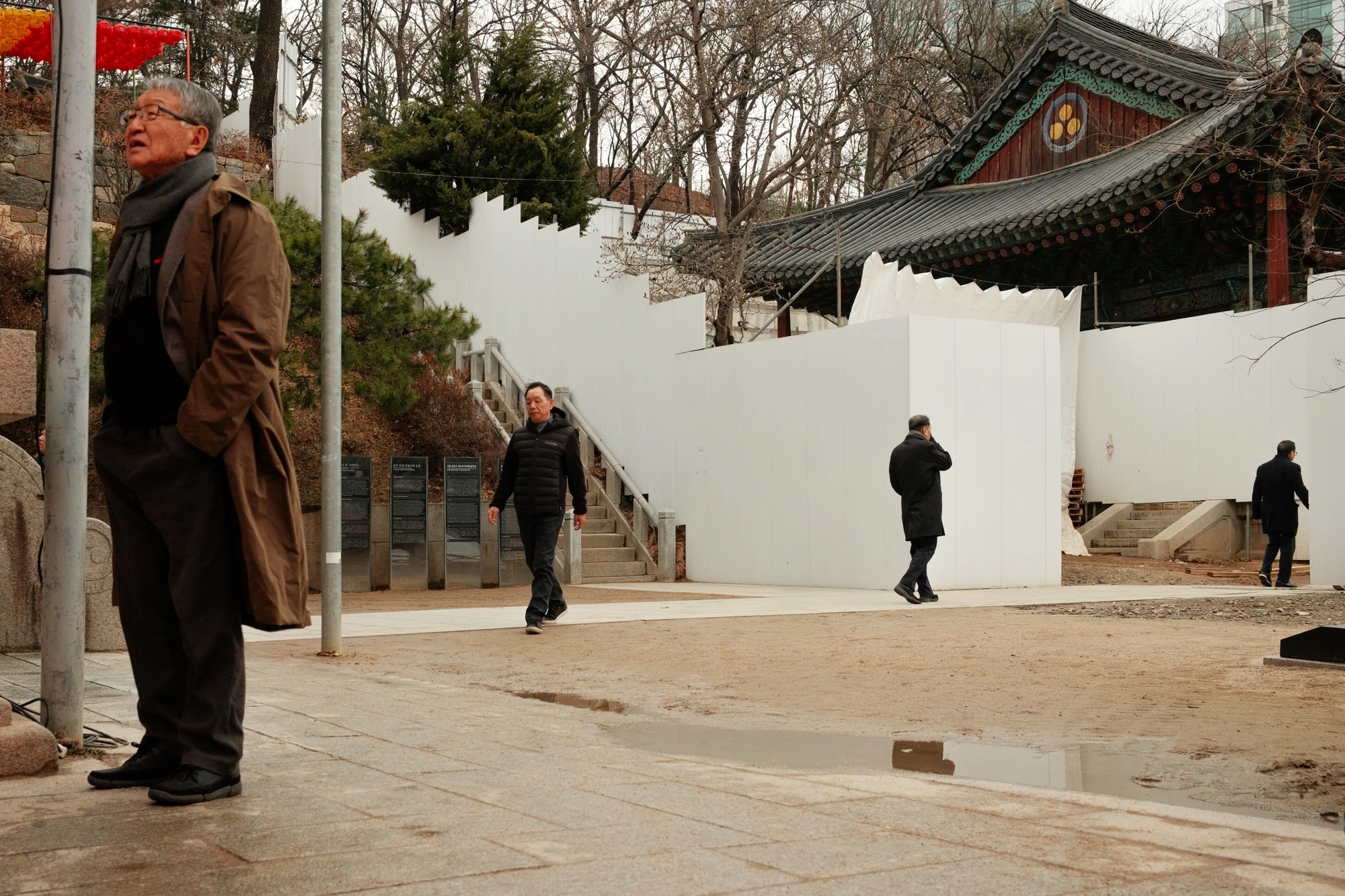
My photo Four Paces Apart from Bongeunsa Temple in Seoul is probably the clearest example of how that happens. Four older men were walking through the dirt courtyard with almost the exact same distance between each of them. None of them were together, and nobody told them to stand like that. They just happened to leave even gaps from the front left of the path all the way to the white wall in the back. I stood still for a second until the fourth man on the right stepped into the open space, took the shot, and a moment later they all walked off in different directions.
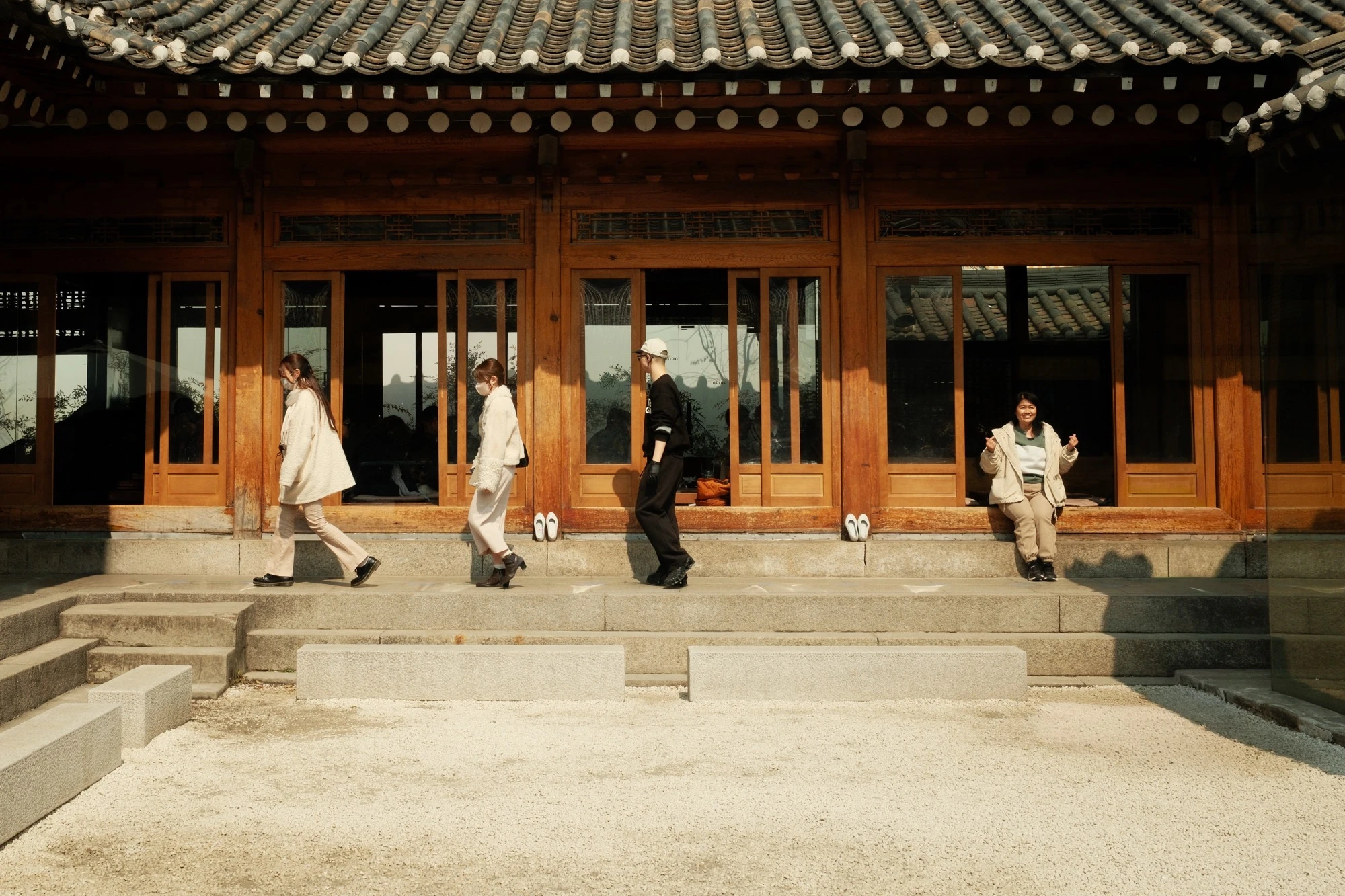
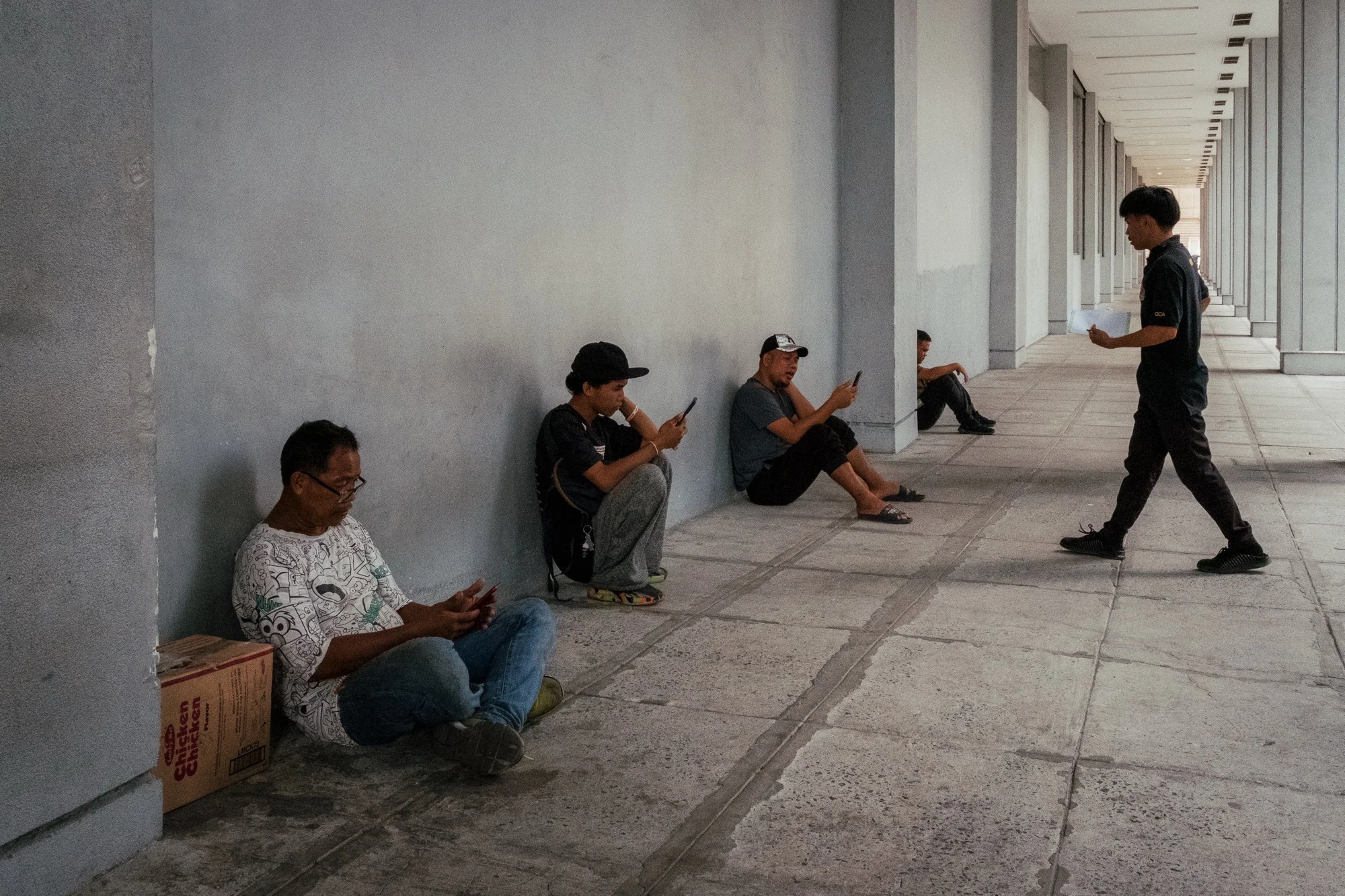
Buildings with repeating columns or wide windows make that spacing even easier to spot. Later that same week in Seoul, we took a break at Cafe Onion in Anguk and I stood out in the gravel courtyard facing the wooden rooms. Three people walked down the stone steps one after another while a woman in the last open window on the right looked over and smiled. A few months later I saw a similar setup back home in BGC inside a covered hallway. Four guys were sitting against a concrete wall with their phones out and a couple of meters between each person, right as a fifth man walked past them on the right.
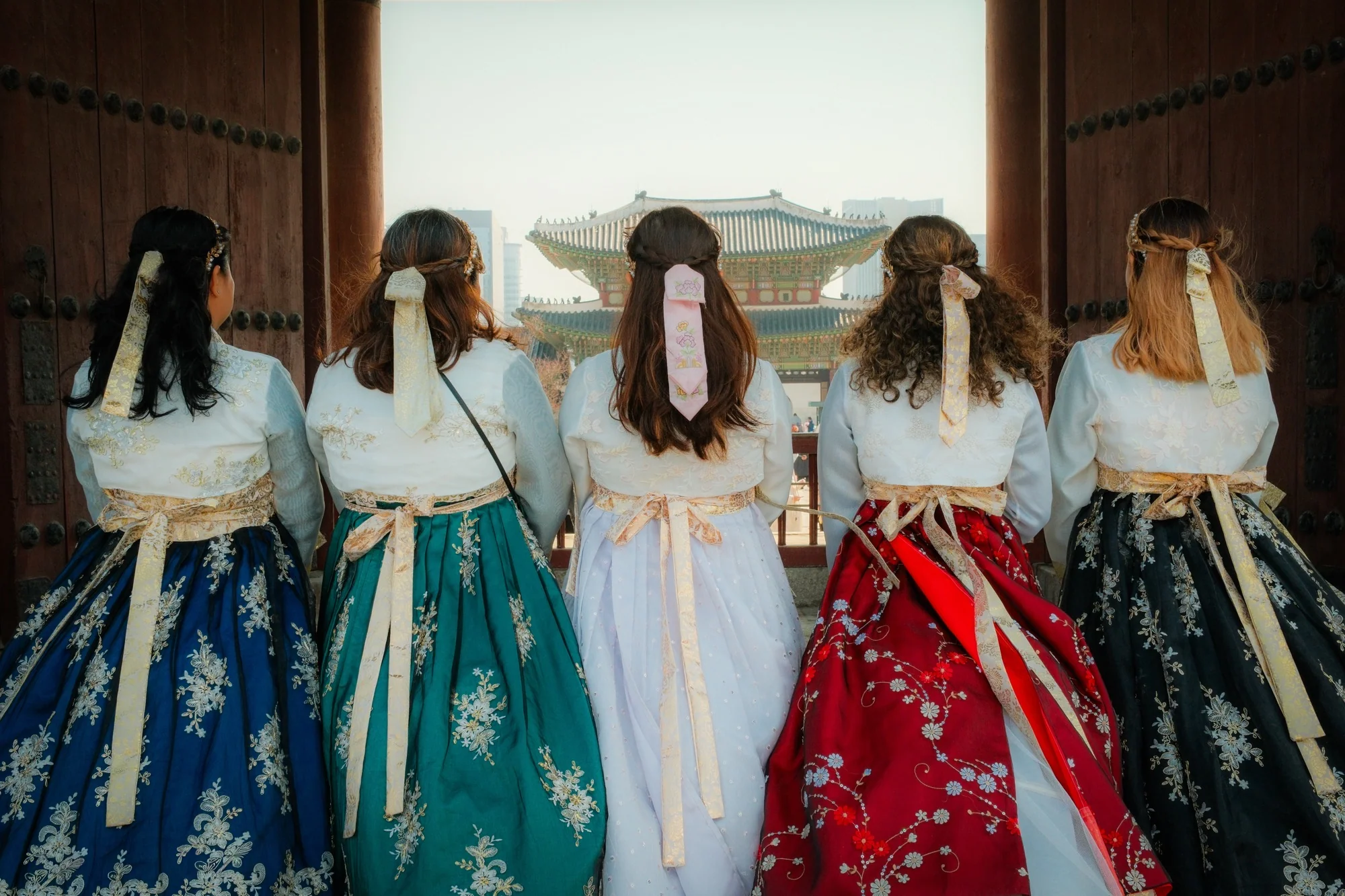
Other times it is the clothes or colors that repeat across the frame and make me stop. At Gyeongbokgung Palace, five women in rented hanbok stood shoulder to shoulder at the main wooden gate to look out at the courtyard. Their hair ribbons hung down their backs in a row, and each skirt had a different color and pattern. I ran into a similar line on a rainy night in Taiwan when a tour group walked down a narrow alley toward me. Everyone had on cheap plastic raincoats in yellow, red, and bright green, and the narrow street forced them to walk in a single file under the shop lights.
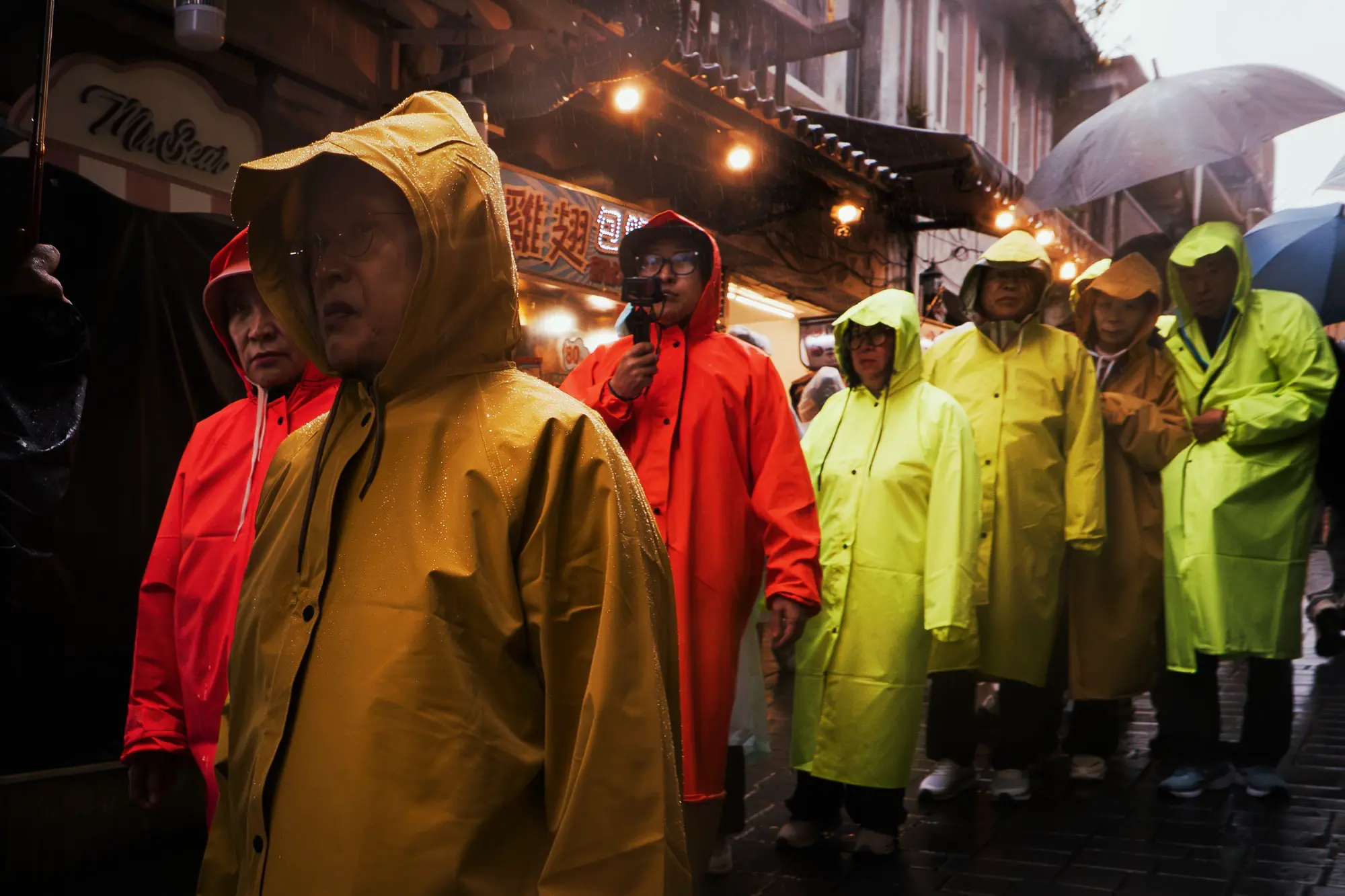
I don't walk around counting heads on the sidewalk, but I almost always wait a second for people to space themselves out before I take the shot.
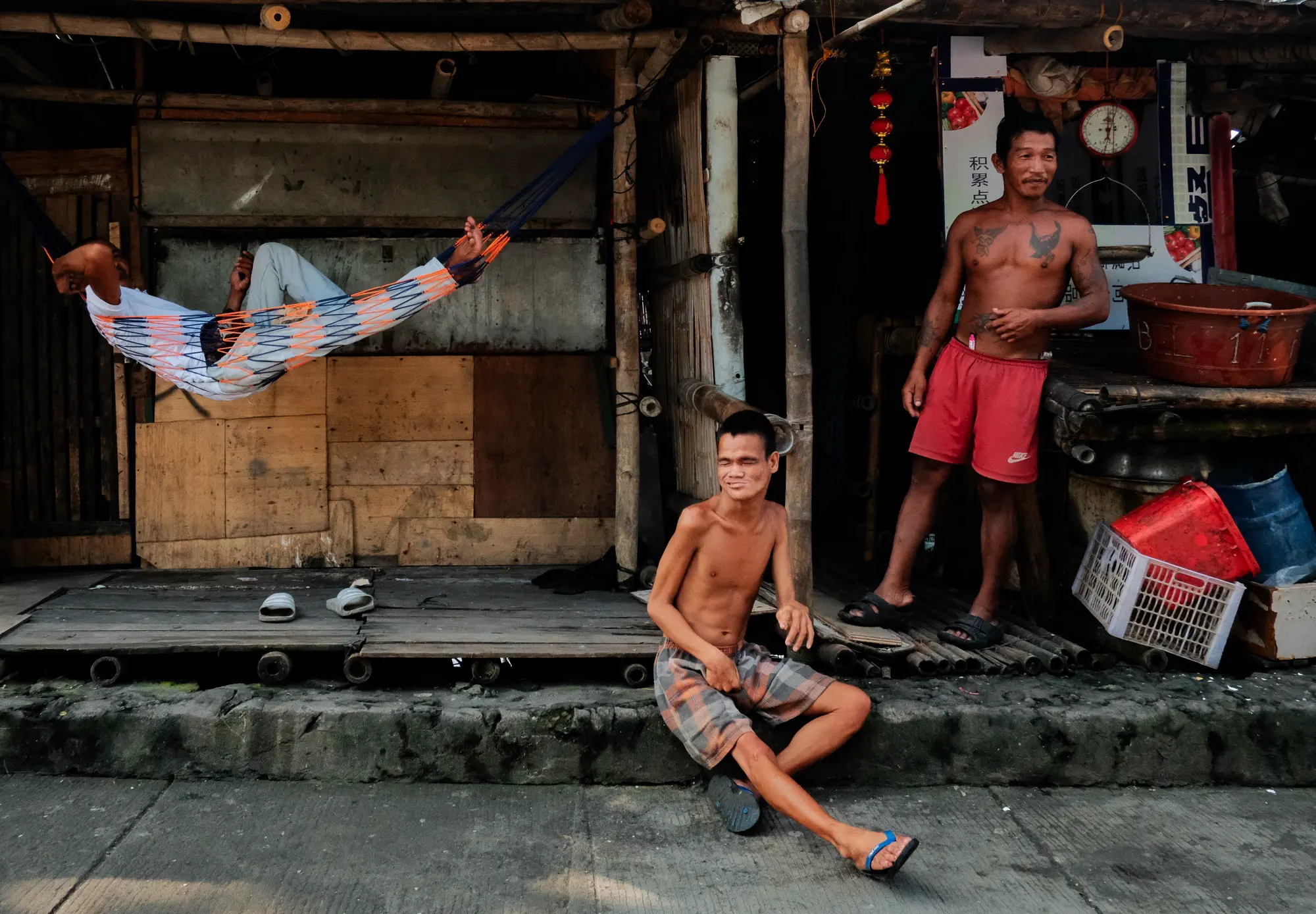
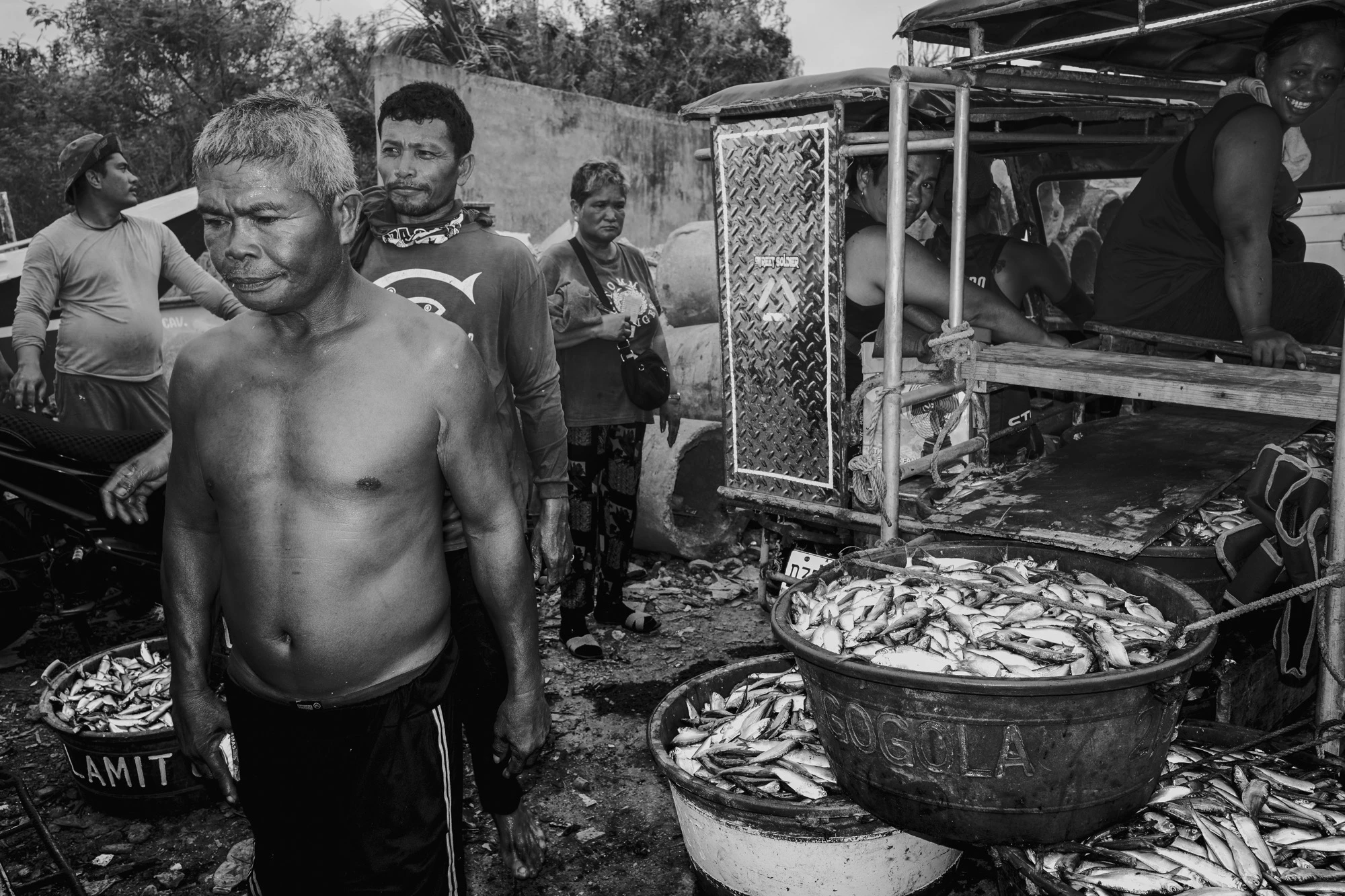
The pattern does not always have to be a flat horizontal line across the street. In Bayanan, I walked past three men taking a break inside a small bamboo shed by the road. One guy was lying flat up in an orange and white hammock, the second man was sitting low on the concrete curb in the middle, and the third stood by the wash basin on the right. Their three positions made a clean diagonal step from the top left down to the curb and back up again. I noticed a front-to-back version of that at the fish port in Cavite City during the morning market. A fisherman without a shirt stood right in front of my lens by a tub of fish, with another man behind his shoulder, a woman further back, and the buyers sitting up inside the sidecar.
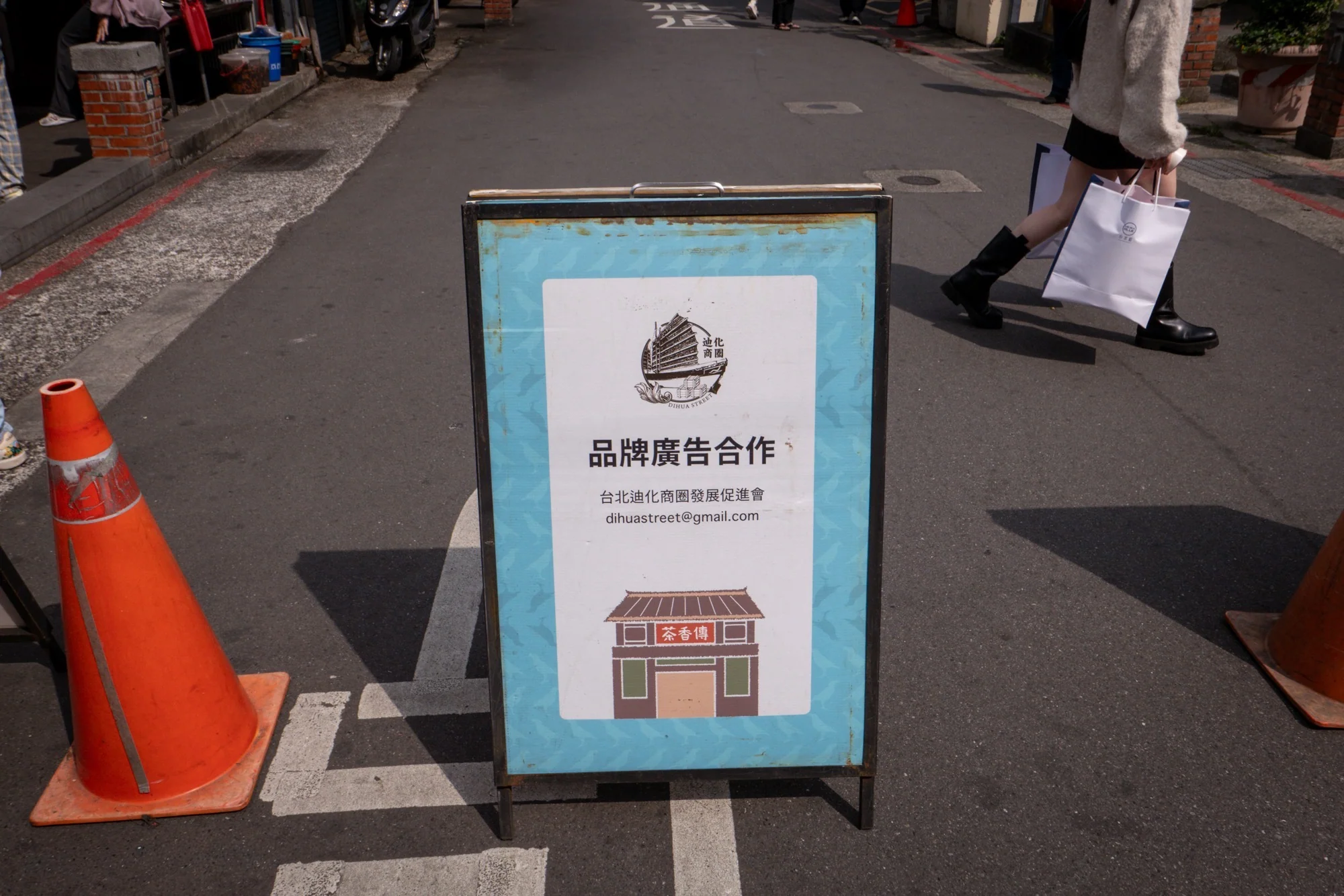
Even everyday street objects can set up that kind of rhythm when someone walks into the right gap. On Dihua Street in Taipei, an orange traffic cone and a metal sign sat in the middle of the road right as a woman in black boots walked past with white paper bags in her hand. The cone, the sign, and her stride filled the left, middle, and right parts of the frame. Back home in Metro Manila, I came across an older man doing leg raises in the middle of a concrete bench that sat on three painted round balls. A young guy with a badminton racket stood on the left side of the court and a girl with her racket stood on the right, so the whole park looked lined up for a second.
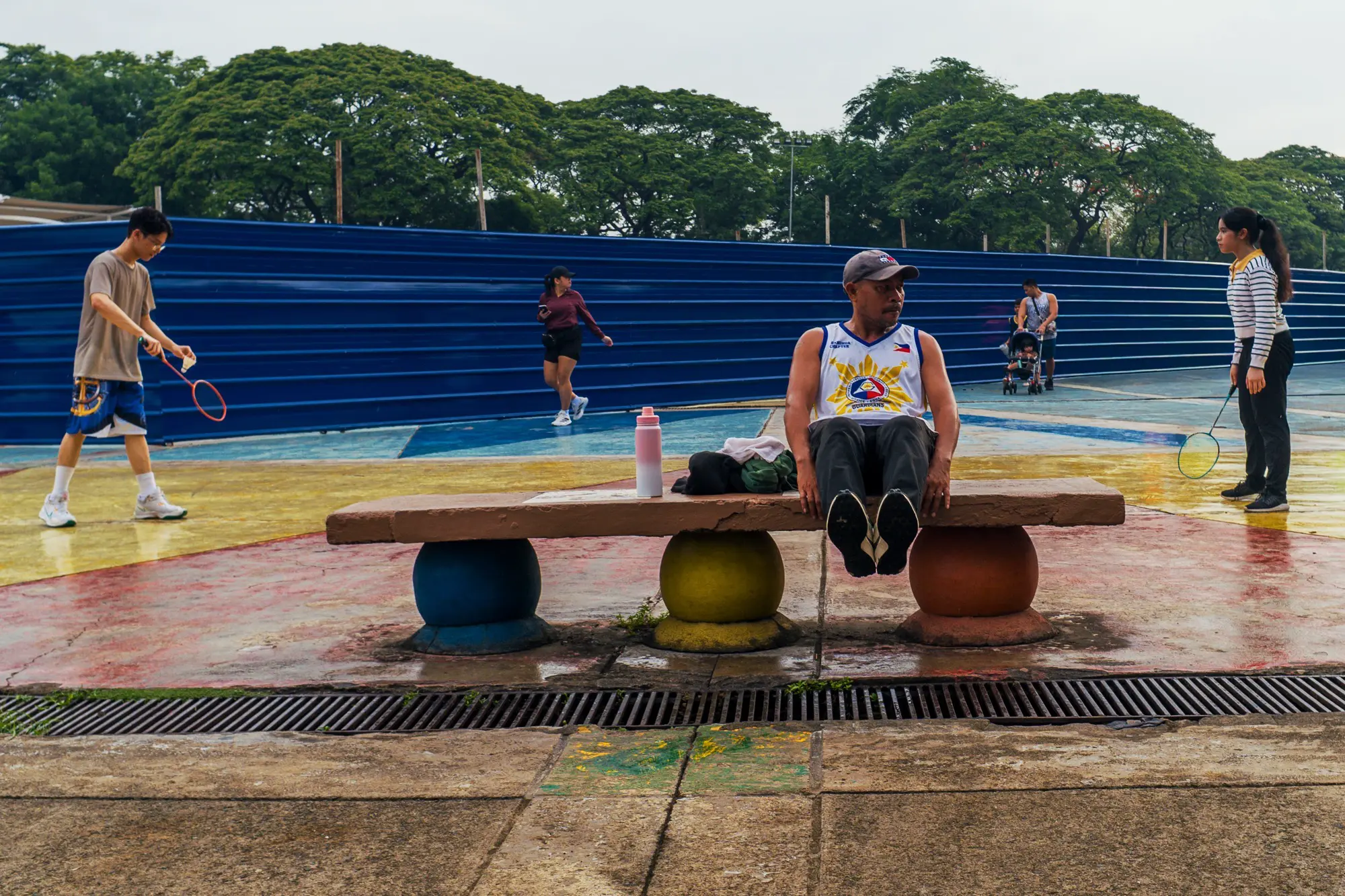
In photography, people usually call this visual rhythm. It works a lot like a steady beat in music. Your eye lands on one person or object, jumps to the next one at a similar distance, and follows that path across the rectangle. That repeating gap gives the viewer a clear line to read, even when the street around them is crowded. If you want to practice spotting it on your own walks, start with places where the building or road already divides the space for you, like hallway columns, store windows, steps, or market stalls. Once you notice two people or objects with a clean gap between them, stop walking and watch the empty spot where a third or fourth person would complete the row. Most of the time you only have to wait a few seconds for someone to step into that open space.
I still don't leave the house with a checklist of shapes or numbers to find on a walk. Most streets are messy, and people rarely stand where you want them to. Still, it is funny to look through old folders from three different countries and see the same habit show up over and over. Once a few strangers or street signs fall into an even line, I almost always bring the camera up.
Written by
Rafael Lorenzo de Leon
Street and documentary photographer based in Manila. Exploring urban transit, everyday labor, and quiet gestures.