The First Frame Is Rarely the Right One
My first shot of a scene almost always has something off about it. Here is why I stopped walking away after the first click.
When you look at a photography portfolio, you only ever see the frame that worked. Every gallery page hides the three or four awkward attempts taken ten seconds earlier. For a long time, I assumed good street photographers just had faster reflexes than me. I thought they walked down the sidewalk, saw a complete picture, pressed the shutter once, and kept moving. Whenever I looked at my own memory card after a walk, I felt frustrated because my first shot of a scene almost always had something off about it.
It took me a couple of years of shooting around Manila to accept that the first frame is usually just a rough draft. When something on the street grabs my attention, my first instinct is simply to get a picture before the person walks away. That first click is pure reaction. Because I am rushing to record the subject, I rarely pay enough attention to the edges of the frame, my distance, or what is sitting in the background. If I lower the camera and walk off right after that first shutter press, I almost always end up with a flat photo that misses what made me stop in the first place.
Working a scene does not mean putting the camera on high-speed burst and holding the button down while hoping for luck. To me, it means treating the first shot as a starting point and then fixing one problem at a time while the moment is still there. Usually I am asking myself two very simple things right after that first click. Either I need to move my feet to change the frame, or I need to stay planted in one spot and wait for the people inside the frame to move into a better position.
Moving My Feet in Bayanan
A good example of fixing a frame with my feet happened in Bayanan, Muntinlupa, early one morning in August. I was walking along the lakeshore where the concrete steps go straight down into the water. An older man in a white basketball jersey was sitting alone on the bottom step with his bare feet in the lake. The morning light on the water was calm, and I raised my camera right away so I would not miss him sitting there.
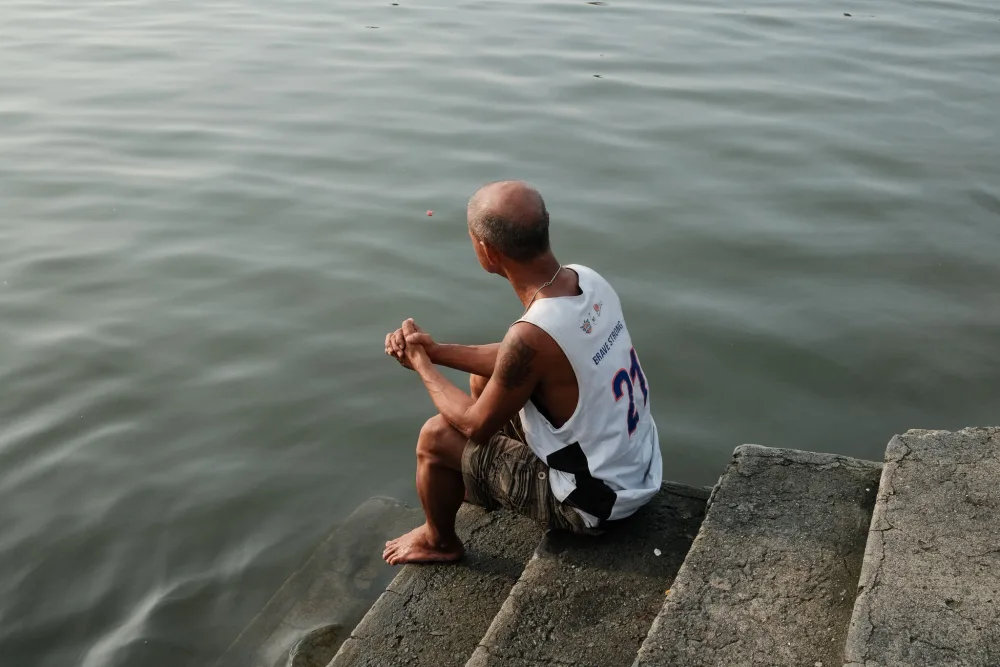
In Frame 01, I was standing much too close to him and pointing the lens straight down at the water. You can see his hands clasped together and the texture of the ripples, and nothing else is in the frame. Without the shoreline or the boats around him, the water could have been any river or pool. The photo only showed a guy sitting on wet steps.
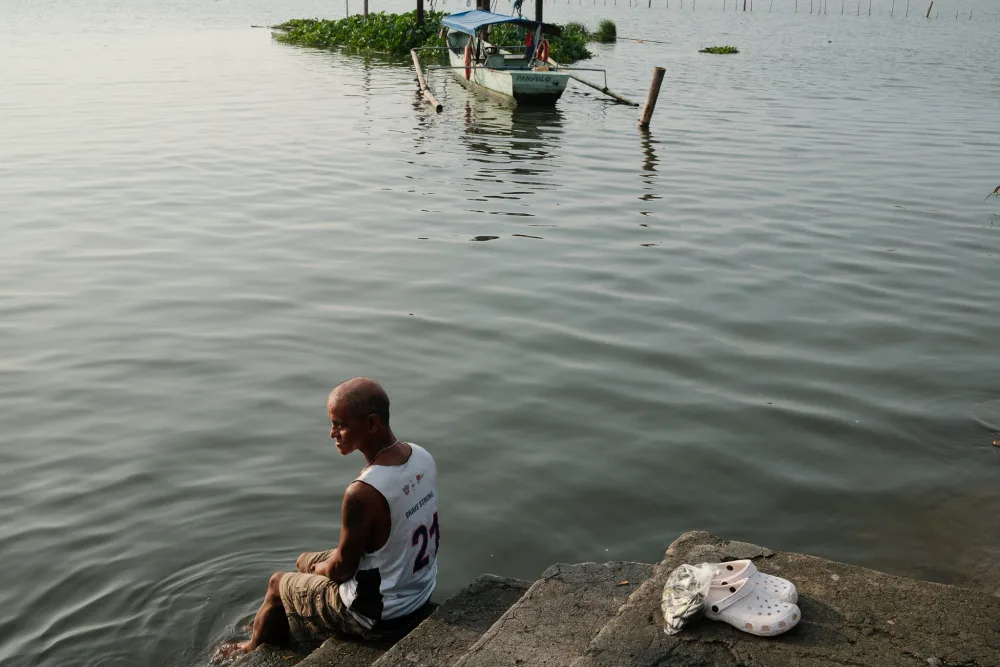
Right after I took that first shot, I looked around the edges of my viewfinder to see what I was leaving out. A wooden banca painted with the name Pangulo was tied to bamboo poles just a few meters out in the water, and the man's white Crocs sat beside a small plastic bag of fish on the top step to my right. Those two details told you where he was and what he had been doing that morning. I took a few steps back up the concrete landing to fit the boat at the top of the frame and the shoes at the bottom right.
That adjustment gave me Frame 02, and it immediately solved the context problem. At that exact second, the man heard my footsteps behind him and glanced back over his left shoulder. His expression was not bad, though it broke the mood I had noticed from a distance. It looked like a picture of a stranger noticing a camera rather than a man resting by the lake after fishing.
When someone catches you taking their photo like that, it always feels a little awkward. My old habit was to lower the camera right away, pretend I was done, and walk off down the street. Instead, I stayed where I was, kept the camera near my chest for a few seconds, and looked out toward the moored boat so he knew I was just taking in the lakeshore and not trying to bother him. After a moment, he lost interest in me and went back to his own thoughts.
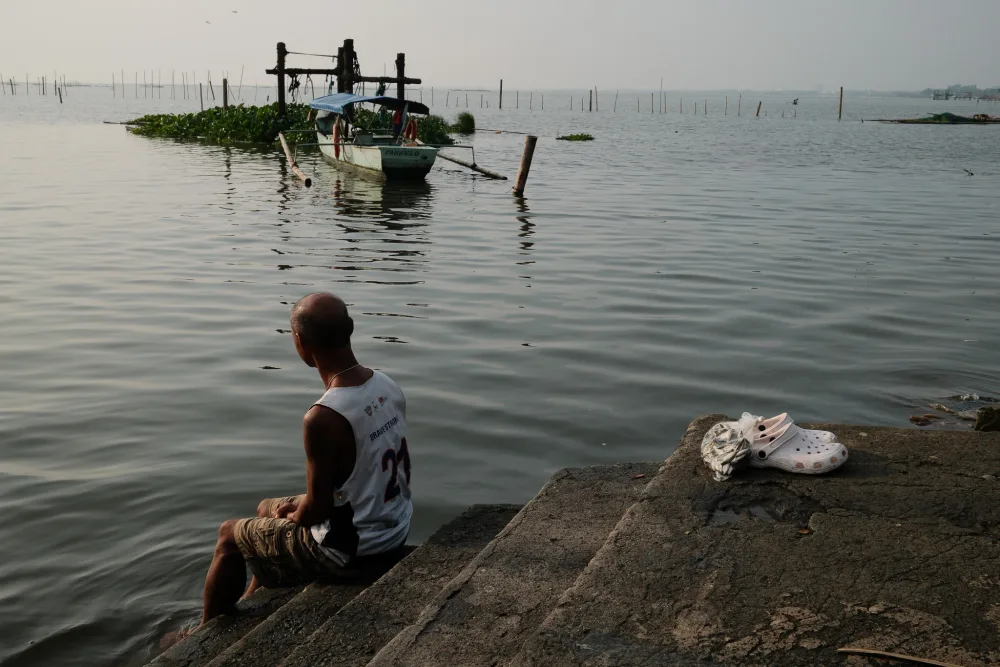
Once he looked out at the water again, I brought the viewfinder back up for Frame 03 and tilted the lens slightly higher so the distant line of bamboo fish pens showed up along the very top edge. Even with the boat, the horizon, and the shoes in place, the bottom left corner of the frame still felt like dead space. His body and the steps were all weighted to the right side, and the water on the left had nothing anchoring it.
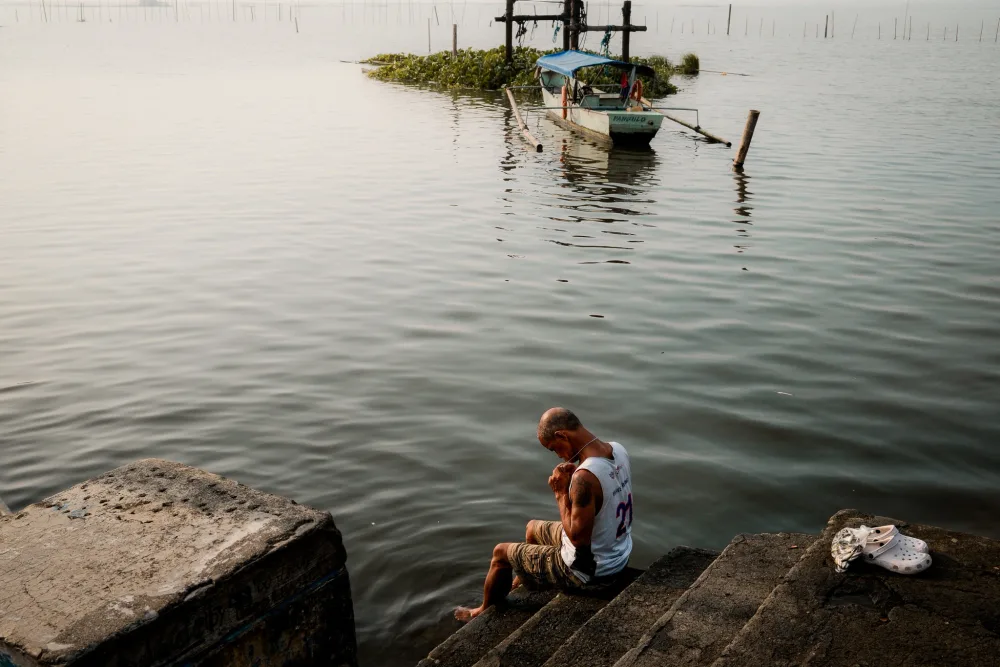
For Frame 04, I took one small step to my left so the square concrete block at the edge of the landing came into the bottom left corner. That block acted like a counterweight to the steps and the white Crocs on the right, and it framed him in a triangle between the concrete, the shoes, and the moored boat above his head. Right as I settled into that spot, he lowered his head and brought his left hand up to his mouth. Everything I wanted in the picture lined up at the same time.
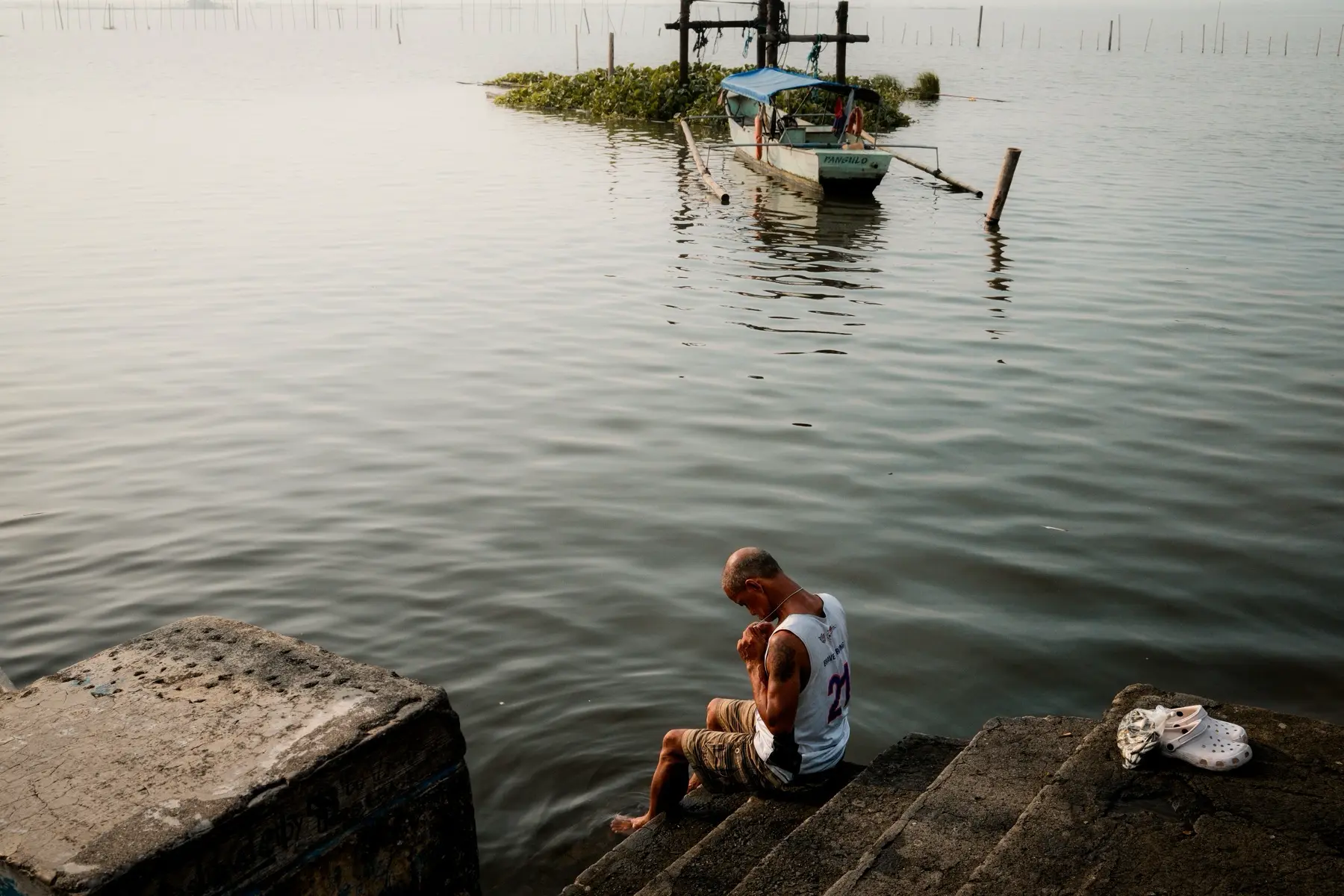
Looking back at those four files, the whole sequence took less than thirty seconds from start to finish. If I had walked away after Frame 01, I would have had a forgettable close-up of a man's back. Each frame after that fixed one specific thing I noticed in the viewfinder. First I stepped back to add the boat and his shoes, then I waited for him to look away from me, and finally I shifted left to balance the foreground corners while waiting for a better gesture.
The first click usually just shows me what I left out of the frame. The real work happens in the ten or twenty seconds after that.
Holding My Ground in BGC
Not every street photo gives you thirty seconds to walk around and test different angles. Sometimes the background and the camera position are already set, and moving your feet will actually ruin the alignment. When that happens, working the scene is all about holding your ground and tracking the spacing between moving people until they hit the right spot.
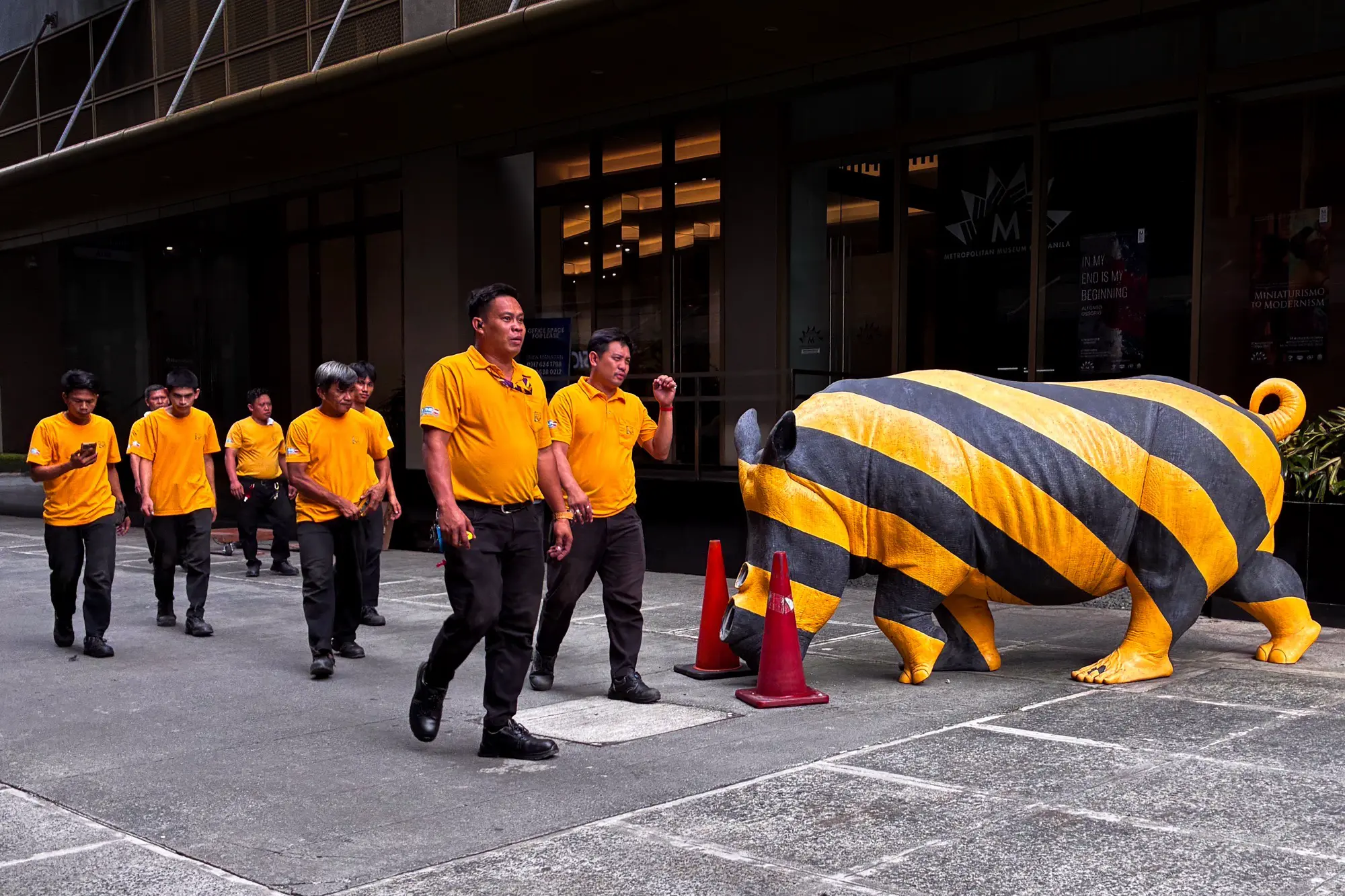
I ran into that kind of situation outside the Metropolitan Museum of Manila in BGC. A large sculpture of a rhino painted in bright yellow and black hazard stripes sat on the sidewalk with two orange traffic cones right in front of its snout. I was standing across the walkway looking at the sculpture when I spotted a group of people walking down the covered path toward me. Every single one of them was wearing a bright yellow polo shirt and black pants that matched the exact colors on the rhino.
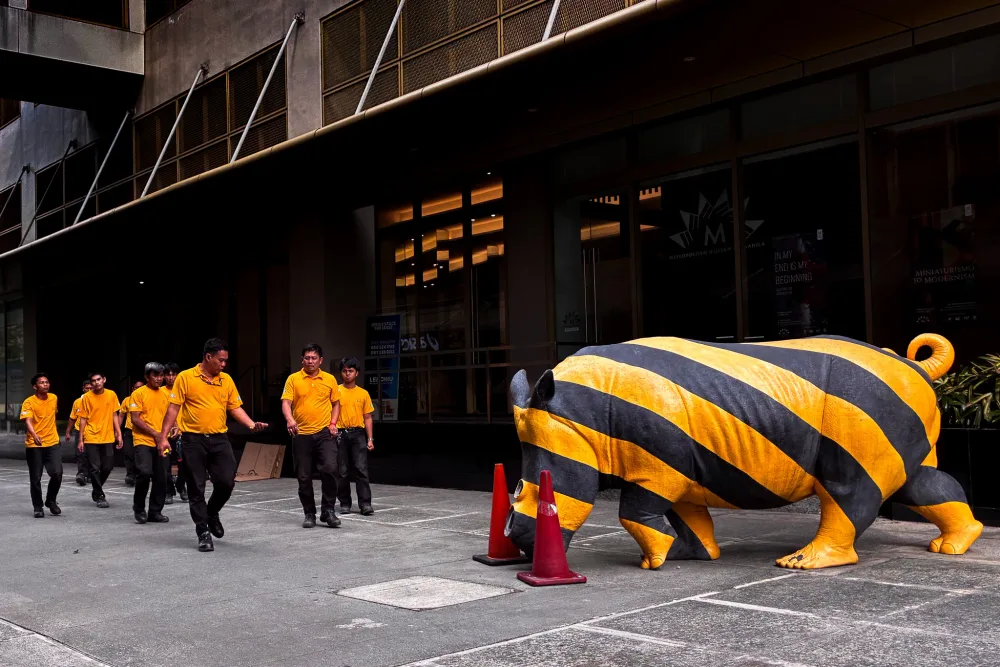
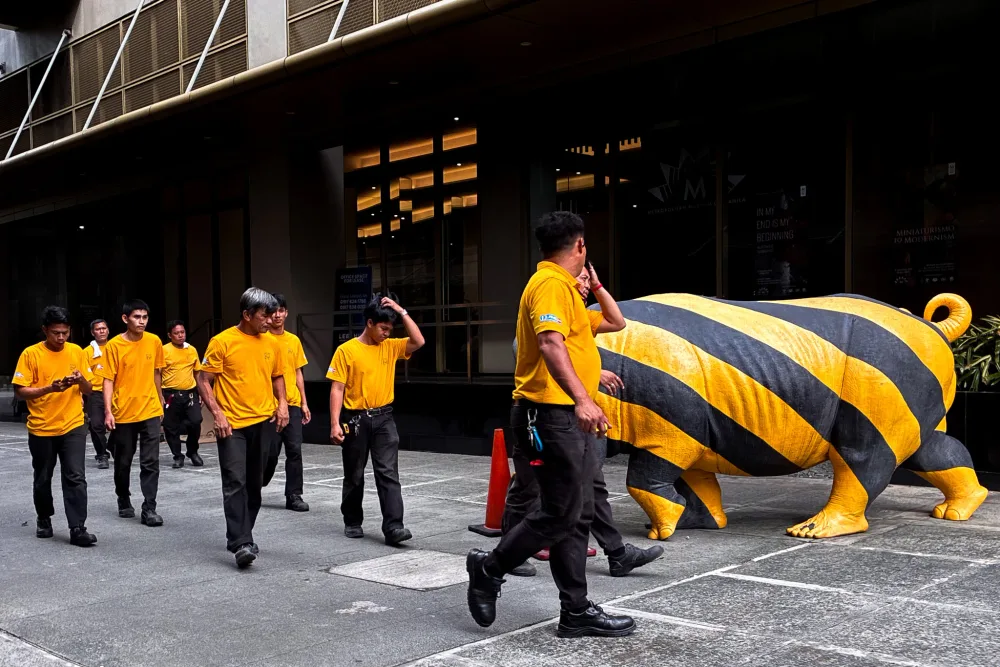
As soon as I saw their yellow shirts coming down the sidewalk, I knew I only had a few seconds before they walked right past the sculpture. I planted my feet so the dark glass of the museum stayed behind them and took Frame 01 as a safety shot while they were still several paces away. In that first photo, the guy in the lead is looking down at the pavement with his hand out, and there is a wide empty gap of concrete between the people on the left and the orange cones in the middle. You can see the color match right away, though the two halves of the picture feel disconnected.
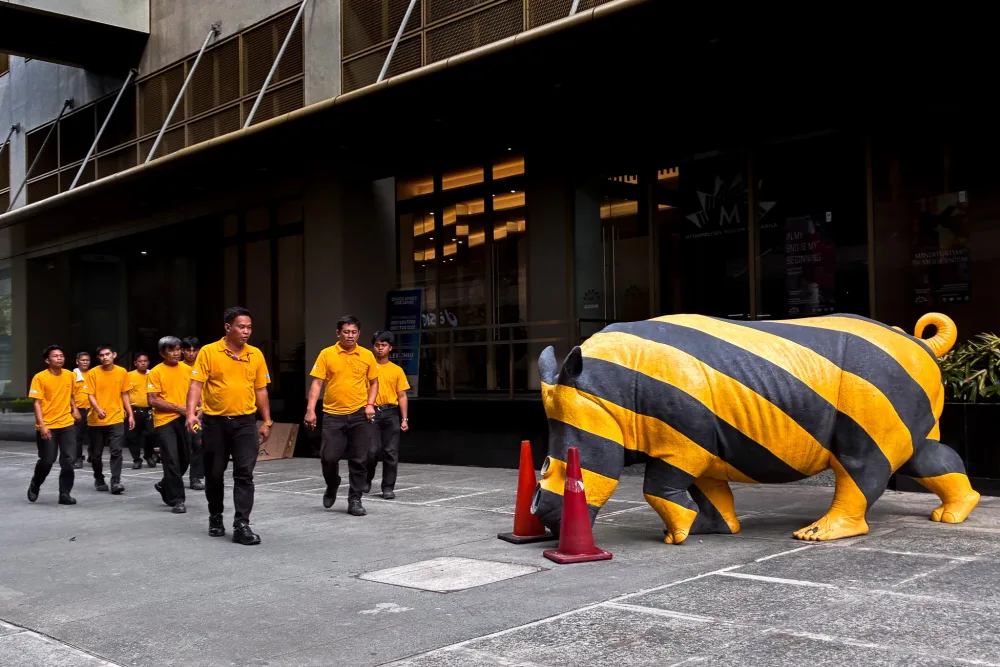
I stayed still with the camera at my eye and took Frame 02 as they came a step closer. The distance between the group and the rhino was much better here, and the people in the back formed a nice line of yellow shirts. Still, the body language in the front felt a little flat. Both of the men leading the group had their arms hanging straight down at their sides, and the guy on the far left was mid-step in a way that made the left edge feel cramped.
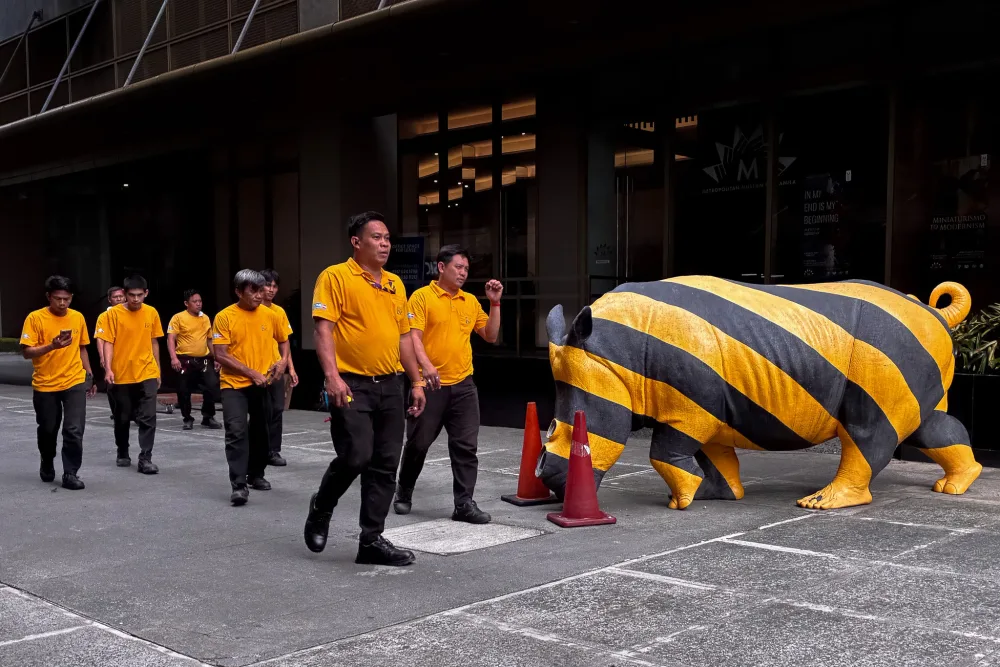
One step later, I took Frame 03. That half-second changed the whole energy of the group. The person on the far left looked down at his phone with a bit of breathing room near the edge of the frame, the older men in the middle stayed clearly visible in the gaps between shoulders, and the man in front stepped forward with his head up while the person beside him raised his left hand near his chest. Best of all, the front of the group reached the exact edge of the concrete square right in front of the two orange cones without touching them. The line of seven people in yellow shirts led your eye straight down the sidewalk to the striped rhino, and every person had clean separation.
I took one more shot just a second later in Frame 04, and the picture fell apart completely. The man on the right walked straight past the orange cones and stepped directly in front of the rhino's snout with his hand up by his ear. Meanwhile, the person in the lead turned his back to the camera and overlapped the man behind him. If I had blinked or hesitated by a single second on Frame 03, that messy overlap in Frame 04 would have been the only close shot on my card.
What Goes Through My Head After the First Click
Comparing those two contact sheets shows the two main ways I try to work a scene when I am out walking. In Bayanan, the subject was sitting still, so I had to move around him until the background and corners made sense. In BGC, the background was fixed and the subjects were walking, so I had to stay still and shoot through their movement until the spacing clicked.
Whenever I raise my camera on the street now, I try to run through a quick mental check right after I take the first frame:
- Check the four corners before lowering the camera. Right after the first shutter click, I keep my eye in the viewfinder and look away from the main subject. I check if a step to the left or right will hide a distracting sign or bring in an object that adds context, like the boat and the Crocs in Bayanan.
- Watch for overlapping heads and shoulders. When there are multiple people in a scene, the first shot almost always has two bodies merged together. Staying with the group for three or four extra steps gives people time to separate into clean gaps.
- Wait for the camera awareness to pass. If someone glances up because they saw you raise the camera, do not panic and walk away. Most people on the street lose interest in you after two or three seconds and go right back to what they were doing.
- Shoot past the moment you think you got it. Even when Frame 02 or Frame 03 feels good in the viewfinder, I try to take one more frame just to be sure. Half the time that extra frame is too late, like Frame 04 in BGC, and the other half of the time it ends up being the gesture you did not see coming, like Frame 04 in Bayanan.
Nobody hits the best composition on the first try every time they go out shooting. Street photography has too many moving parts for that. Giving yourself permission to take a bad first frame takes a lot of pressure off when you are walking around. Once that first safety shot is on the card, you can slow down, read what is actually in front of you, and stay with the scene until the picture settles into place.
Written by
Rafael Lorenzo de Leon
Street and documentary photographer based in Manila. Exploring urban transit, everyday labor, and quiet gestures.